
In Air Traffic Control Safety is Paramount
The performance of Air Traffic Controllers is critical to the safe and orderly movement of aircraft, and ATCOs are obviously subject to human factor considerations. As Air Traffic Management systems are complex, the simpler and more straightforward the interfaces and interactions can be, the better.
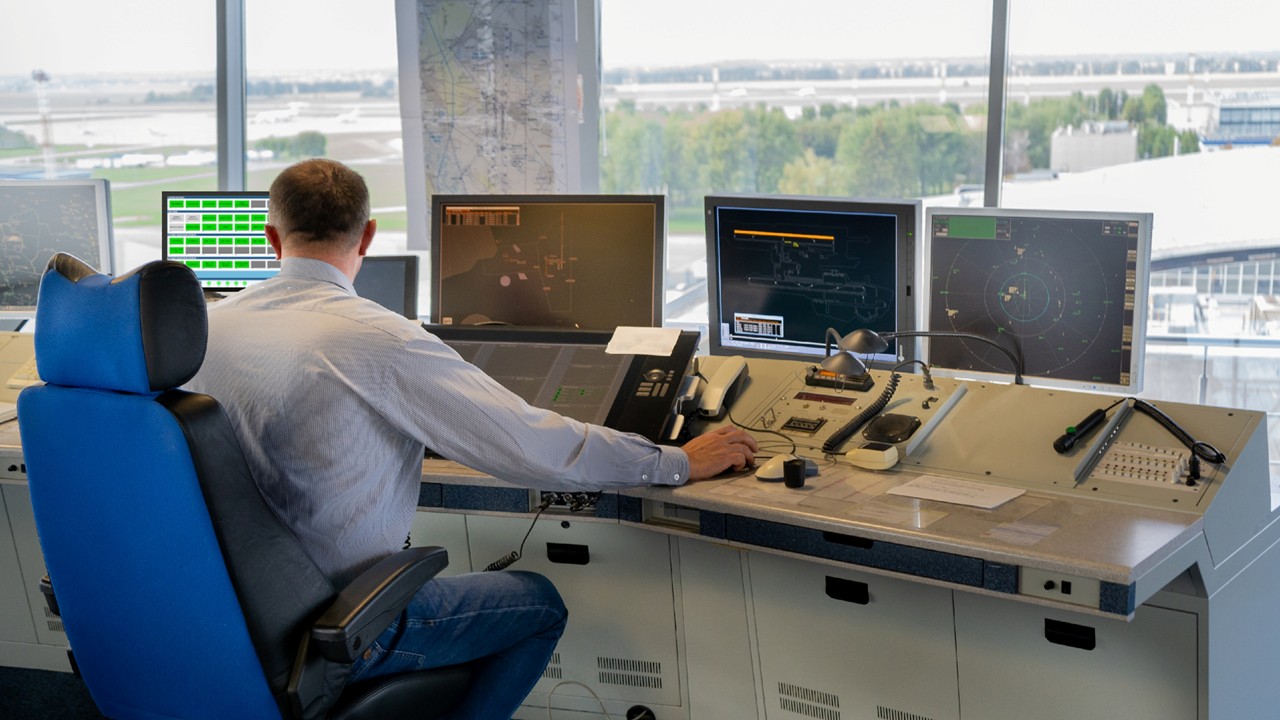
PAMS provides a clear visual indication of the operational status of the aerodrome. It requires minimal ATC training to understand, and in the event of a failure will instantly highlight the issue to support ATC decision making.
Resolving Issues Quickly
PAMS monitors not only an aerodrome's ground-based equipment such as the airfield ground lighting (AGL) and Primary Surveillance Radar (PSR), it will also monitor the supporting elements such as power and communications links. This makes it easier for Air Traffic Safety Electronic Personnel (ATSEPs) to identify an issue and results in a faster resolution.
Proven in Service
PAMS has been deployed in commercial airports since 2003. With installations in both civil and military aerodromes, with contingency and full remote digital tower capabilities. PAMS is well proven in service.
Supporting Decision Making
PAMS advanced alarm management goes further with its Information Display (or Document) System (IDS) to support decision making. SOPs, NOTAMs, approach charts etc. can be accessed through simple interactions. Shift break requirements can be enforced through the on-screen logged on timer.
Why PAMS?
Advanced System Features
PAMS capabilities go far beyond traditional alarm systems
- Augmented Alarm and Event Recording
- Alarm Groupings
- Location Based Alarm Acknowledgement
- Alarm Nag
- Alarm Revert Acknowledgement
- Alarm Delay Periods
- Alarm Hysteresis
- Maintenance Mode
- Alarm Statistics
- Handover Control
- Broadcast Notifications & Escalation
- Major Fault Facility
- Frequency of Issues Tracking
- Self Diagnostics
System Interfacing & Connectivity
PSR
Primary Surveillance Radar
VCS
Voice Communication System
EVCS
Emergency Voice Communications
RECORDERS
Voice & Data Recording Systems
ILS
Instrument Landing System
DME
Distance Measuring Equipment
NDB
Non-Directional Radio Beacon
IRVR
Instrumented Runway Visual Range
SAMOS
Semi-Automated Meteorological Observation
VHF / UHF
G/A Radio Communications
UPS
Uninterruptible Power Supply
NTP
Master Clock - Network Time Protocol
VREC
Voice Recording System
SSR
Secondary Surveillance Radar
MET
Meteorological Information Management
SMR
Surface Movement Radar